

Welcome to our series “Masterpeice of the Month”!
Each month, we feature a famous piece of music that many recognize—but rarely listen to with full attention. We explore where it comes from, what makes it musically unique, the stories behind it, and where you can experience it live—for example, at a concert by the Vienna Residence Orchestra.
Whether it’s a waltz, serenade, or symphony—this is where you’ll discover what makes classical music truly worth hearing.
Masterpiece of the month
“The Blue Danube” – Johann Strauss (Son)
Origin: From Times of Crisis to a Cultural Gem
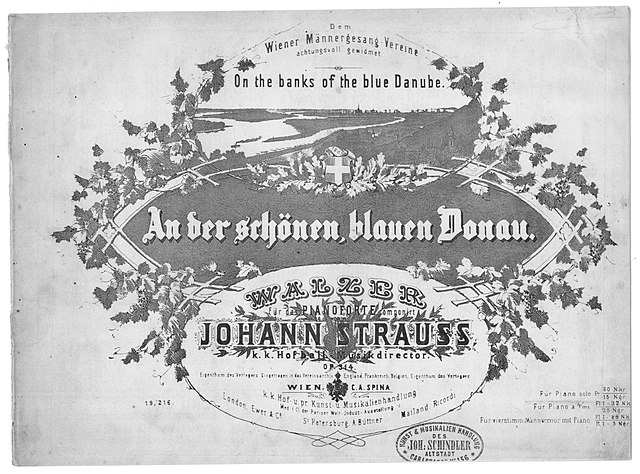
When Johann Strauss Jr. composed the Blue Danube Waltz in 1867, the mood in Vienna was far from cheerful: the Austro-Hungarian Empire had just suffered a heavy defeat in the war against Prussia, and the political and economic situation was tense. Nevertheless, the Vienna Men’s Choral Society commissioned Strauss to create a choral work intended to bring some optimism to a carnival concert.
Strauss set to music a witty text by Franz von Gernerth—a blend of humor, patriotism, and poetry. The work was well received, but its true breakthrough came with the later orchestral version Strauss arranged shortly afterward. Without vocals but with musical finesse, the Blue Danube Waltz became the signature piece of the Strauss dynasty—and Vienna’s unofficial anthem.
What makes the Blue Danube so special?
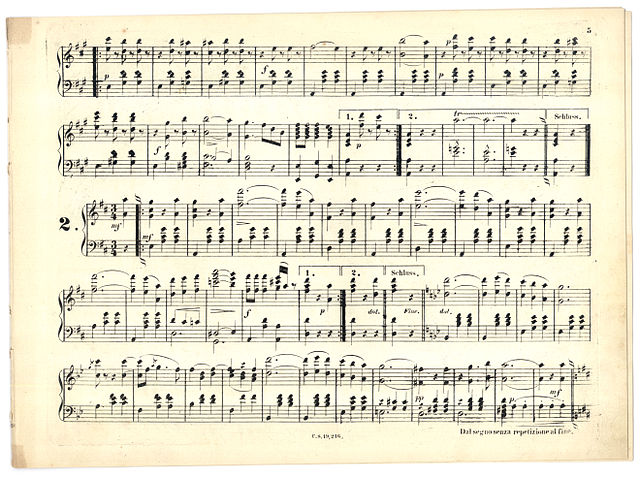
The piece begins with a dreamy introduction—ethereal, almost floating. After more than a minute, the famous 3/4 time sets in, the waltz rhythm that pulses like a gentle river. The waltz themes alternate like episodes of a story: sometimes lively, sometimes melancholic, always elegant.
Strauss achieves something extraordinary here: The Blue Danube feels both festive and sentimental at the same time. It plays with repetition and variation, surprises with modulations—and remains accessible throughout. This balance of lightness and depth makes the waltz unique to this day.
A Must in the Concert Hall
The Blue Danube is a staple in the repertoire of the Vienna Residence Orchestra. Whether as a festive finale or the centerpiece of a program, it regularly inspires goosebumps and enthusiasm—both among locals and international guests.
The waltz is also indispensable at the turn of the year: no New Year’s concert is complete without its famous opening bars. Millions of viewers worldwide associate this moment with Vienna, classical music, and a touch of magic.
In Film and Pop Culture: From the Concert Hall to Outer Space
The Blue Danube Waltz has long found its place in popular culture. It is especially famous for its use in Stanley Kubrick’s classic film 2001: A Space Odyssey (1968), where it wordlessly portrays the weightlessness of a space station. Here, the waltz symbolizes elegance, technology, and human ambition.
Since then, the piece has repeatedly appeared in films, advertisements, and series—sometimes nostalgically, sometimes ironically, often as a synonym for Viennese flair or timeless beauty.
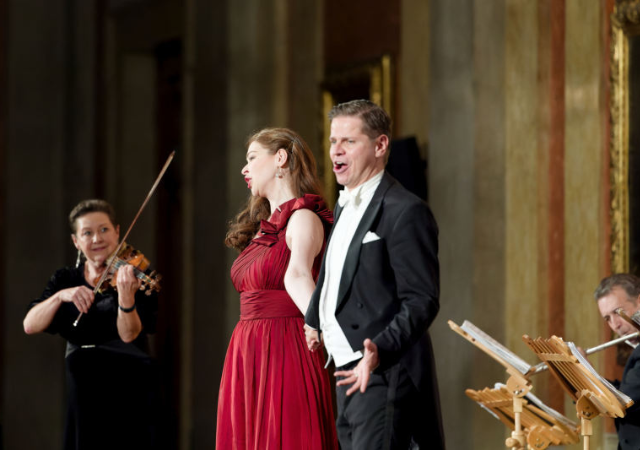
Fancy a glimpse? The Blue Danube Waltz live at the Musikverein
In our embedded video, you can see and hear the Vienna Residence Orchestra in a special concert moment: a live performance of The Blue Danube — in the venerable Brahms Hall of the Musikverein Vienna.
This version is unique as it presents the work in its original form with choir: the famous opening section is interpreted not only instrumentally but also vocally — true to Strauss’s first 1867 version.
The combination of the magnificent setting, lively interpretation, and the power of the music creates a goosebumps moment that must be seen and heard. A true highlight — and perhaps the best preview for a concert visit in Vienna.
Symbolism: The Sound of Vienna
Hardly any piece is as closely linked to Vienna as the Blue Danube Waltz. It is regarded as a musical emblem, cultural heritage, and a top tourist attraction all at once. For many, it is the sonic image of a city that moves gracefully between history and the present—with elegance, but also with a wink.
Experience it live? Absolutely!
The Blue Danube Waltz is not only world-famous—it can also be experienced live.
The Vienna Residence Orchestra performs it regularly in Vienna’s most beautiful concert halls.
If you truly want to feel Strauss’s masterpiece:
The Vienna Residence Orchestra, a chamber orchestra with a long tradition, performs works of Viennese classical music to perfection.