

Every month, we present an orchestral instrument – from its origins to its unique tonal characteristics. This time, we dedicate ourselves to a true universal genius: the piano.
Its endless tonal variety ranges from a gentle melody to an orchestral torrent of sound. An instrument that blurs the lines between soloist and accompanist.
The Piano
The keyboard world of the orchestra
From Harpsichord to Grand Piano
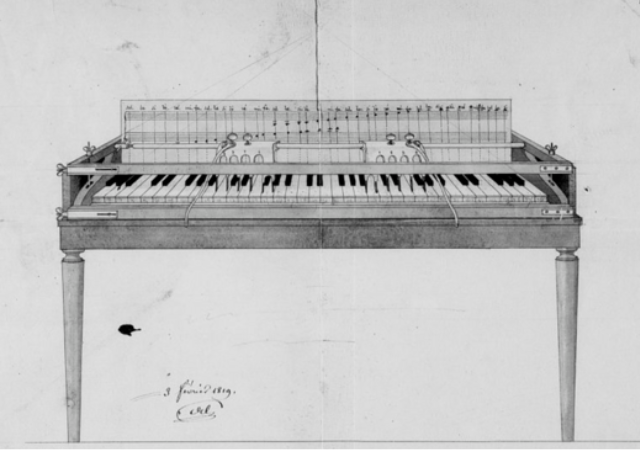
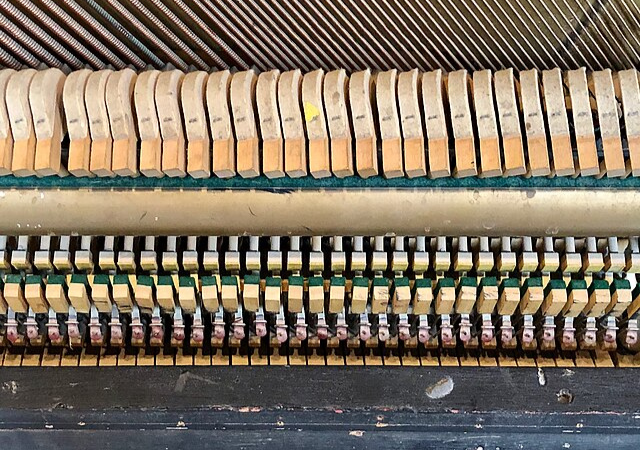
The piano, or pianoforte, was developed around the year 1700 by Bartolomeo Cristofori in Florence. It was intended to overcome the limitations of the keyboard instruments common at the time, such as the harpsichord and the clavichord. Unlike these, the piano produces sound by hammers striking strings. This allows pianists to control the volume (Italian: piano = soft and forte = loud) through the strength of their touch – a revolutionary feature that gave the instrument its name.
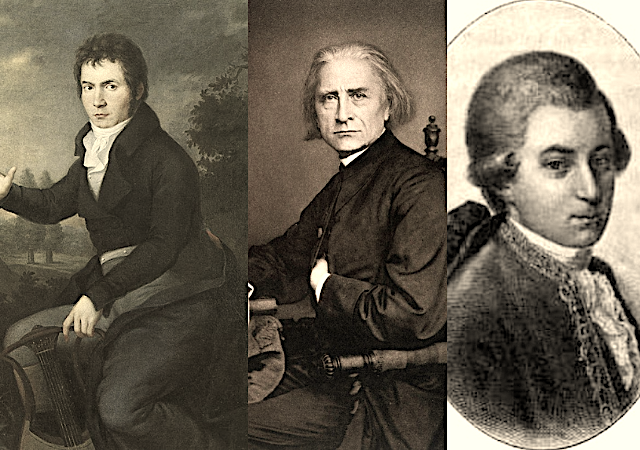
Famous piano makers such as Steinway & Sons or Bösendorfer perfected its sound and mechanics – as did composers who made it the most important instrument in music history: Mozart, Beethoven, Chopin, and Liszt wrote works that still form the core of the repertoire today.
Soloist, accompanist, and orchestra in one
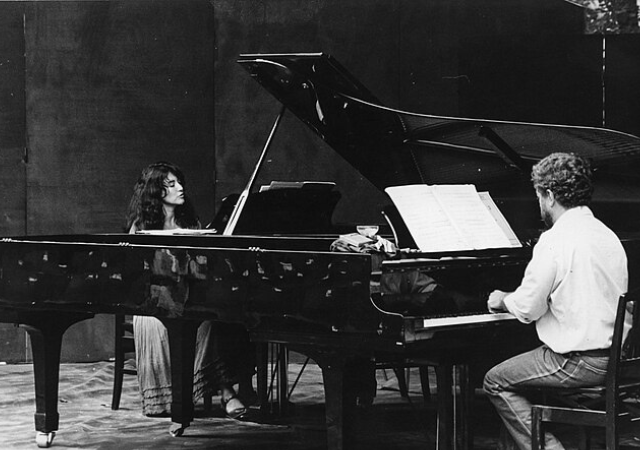
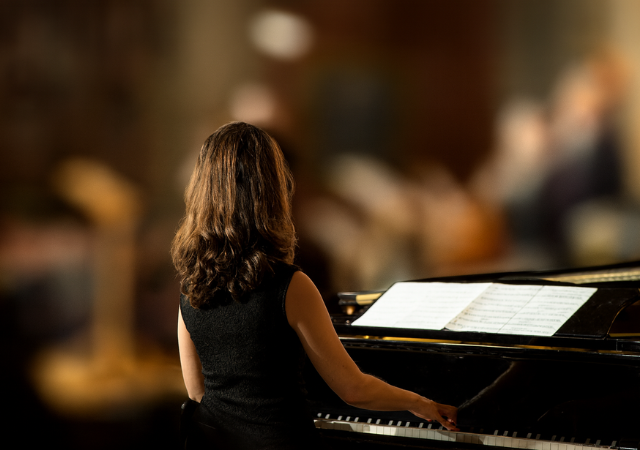
In the concert hall, the piano often takes on the role of the brilliant soloist, challenging and inspiring an entire orchestra. But it can also serve as a subtle accompanist, providing the harmonic foundation for a string quartet or a singer.
Its greatest strength is its versatility: With two hands, pianists can imitate the deep harmony of the double bass, the floating chords of the strings, and the singing melodies of a violin. A piano is capable of reproducing the entire sound spectrum of an orchestra, making it a true all-rounder.
Multifaceted, dynamic, expressive
The piano can be percussive and rhythmic, but also singing and lyrical. A fast run can sparkle like a waterfall, while a single chord can sound so deep and full that it fills an entire room. The dynamics – from an almost inaudible whisper to powerful thunder – make it one of the most expressive instruments of all.
The pedals greatly expand this expressiveness: The right pedal (sustain) holds notes and chords, allowing them to blend, while the left pedal (una corda) softens and dampens the sound.
The piano as a soloist and master of dynamics
For those who want to experience the full range of the piano, Beethoven’s piano sonatas, Chopin’s nocturnes, or the Hungarian Rhapsodies by Liszt are highly recommended.
But also in the Viennese Classical era it plays a leading role – for example in Mozart’s piano concertos or the piano trios.
In the concerts of the Vienna Residence Orchestra, the piano appears as a central soloist or as a sensitive accompanist – especially in virtuosic concerts, intimate chamber music pieces, or the rousing waltzes and marches of the Strauss dynasty.
Famous solo pieces for the piano
Classical music Throughout the history of music, the piano has inspired countless composers to create solo masterpieces. Among the most famous and iconic works are Ludwig van Beethoven’s Piano Sonata No. 14, the “Moonlight Sonata”, renowned for its melancholic and lyrical depth, and the Nocturnes by Frédéric Chopin, considered the pinnacle of Romantic piano music. Franz Liszt’s “Liebestraum No. 3” is also a work full of passion and technical brilliance. These pieces are not only showpieces but also emotional narratives that highlight the piano’s incomparable voice.
Experience it live – at the Vienna Residence Orchestra
Our pianists bring the instrument to life – and make it resonate. Whether as a soloist in a concert or as part of an ensemble, the piano lends every performance a special elegance and depth.
Its sound blends organically into the overall texture – and at the same time can outshine the entire orchestra. It is the powerful pulse of music, carrying both melody and harmony.
In the Vienna Residence Orchestra, the piano is not just a foundation – it is a living expression of emotion, virtuosity, and Viennese musical culture.
The Vienna Residence Orchestra, a chamber orchestra with a long tradition, performs works of Viennese classical music to perfection.