Instrument of the Month
The Violin – Heart of the Orchestra

Welcome to our new series, “Instrument of the Month”!

Each month, we will feature an orchestral instrument, exploring everything from its tonal character to its history. We will look at its origins, its role within the ensemble, and of course, how it is brought to life in the concerts of the Vienna Residence Orchestra. We begin with a classic: the violin. No other instrument shapes the sound of an orchestra quite like it.
Origin: Centuries of Musical History

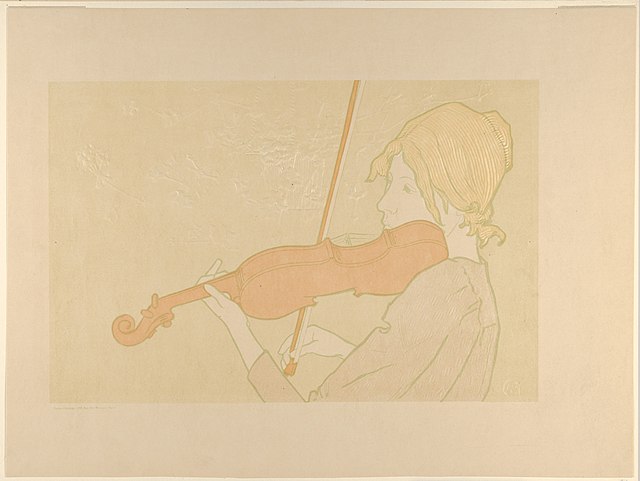
The violin emerged in 16th-century Northern Italy, in cities like Cremona—the home of the famous luthier families of Amati, Guarneri, and Stradivari. Its distinctive sound, elegance, and expressiveness quickly established it as the central solo instrument of European music. As early as the Baroque period, it was regarded as the “Queen of Instruments”—a position it maintains to this day.

Many composers, from Bach to Mahler, have dedicated their most beautiful solos to the violin. It has also long found a firm place in film scores and jazz, serving as a sonic chameleon with profound emotional depth.

Role: A Leading Instrument with Finesse

In the orchestra, the violins—especially the first violin section—play a central role. They often lead the melody, provide harmonic impulses, and carry the sonic weight. Within the string family, they are the most versatile, capable of everything from a delicate piano to radiant brilliance.

Furthermore, the first violin (the concertmaster) also plays an organizational role: They lead the orchestra’s tuning with the note ‘A’ and serve as a liaison to the conductor. In short, without the violin, there is no classic orchestral sound.

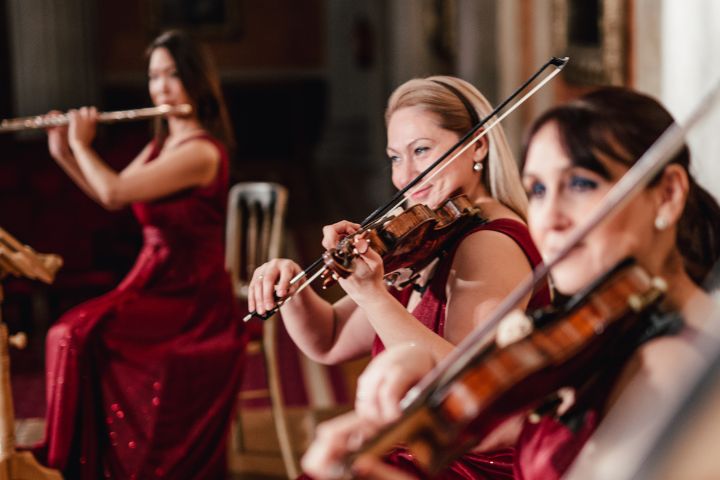
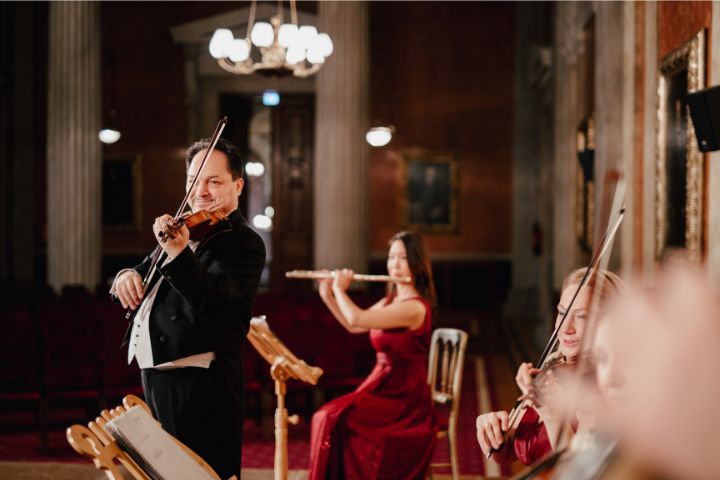
Then there is the visual impact on stage: When the movements of the violin bows synchronize, it creates a visual element that further enhances the music—a fascinating sight, especially in lively pieces or during changes in tempo.

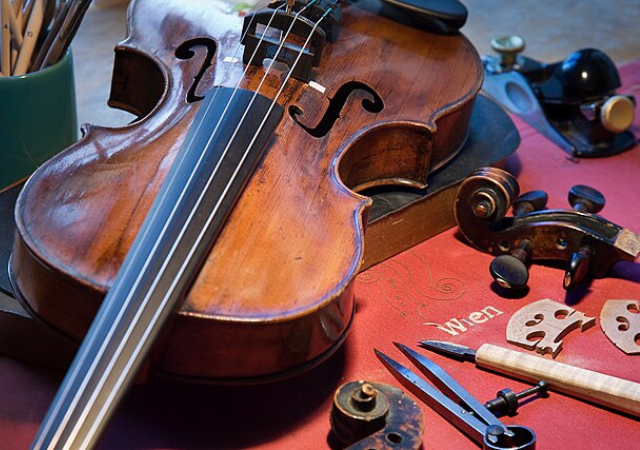
Nahaufnahme einer Geige auf der Werkbank eines Geigenbauers. Um das Instrument herum liegen verschiedene Werkzeuge und Geigenteile wie ein Steg, ein Saitenhalter, ein Zirkel und ein Geigenhals mit Wirbeln.
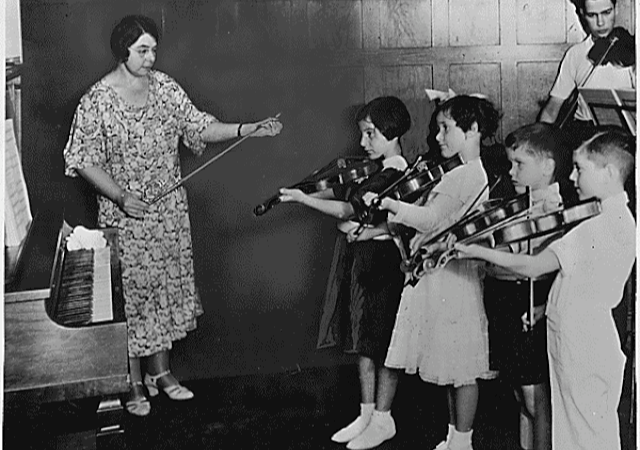
Historische Schwarz-Weiß-Aufnahme einer Geigen-Unterrichtsstunde. Eine Lehrerin steht vor einer Gruppe von Kindern und unterrichtet sie, während die Kinder ihre Geigen in Spielposition halten.

Sound: Versatile and Full of Emotion

The sound of the violin is more versatile than almost any other instrument: it can be soft and melancholic, radiant and joyful, or even sharp and dramatic. One moment it sings a lyrical melody, the next it delivers fiery runs or rhythmic accents.

What makes it especially fascinating is how much its sound depends on the personality and style of the player. Every musician has their own way of drawing the bow and shaping the tone—giving the violin an almost “human” expressiveness.

This emotional closeness is one reason why the violin touches so many people. It often sounds like a voice—one that translates feelings into music when words fall short.

Audio Sample: The Violin in the Spotlight

Eager to listen for the violin specifically? A particularly beautiful example is Tchaikovsky’s Serenade for Strings or Mozart’s Violin Concerto. But in many of Strauss’s waltzes, too, the violin is the voice that dances.

In the famous introduction to The Blue Danube waltz, for instance, the violin provides the first sparkling accent before the waltz unfolds in its full splendor. In opera and operetta as well, the violin often carries the lead melodies and evokes moods—from a tender love duet to dramatic turmoil.

Experience it Live – with the Vienna Residence Orchestra

The violin is the sonic centerpiece of our concerts. Whether in sparkling polkas, emotional arias, or the grand waltzes of Johann Strauss, it carries the magic of the music.

It is also symbolic of the Viennese sound: elegant, virtuosic, and vibrant. Our violinists interpret the classics with technical precision and passionate dedication—an interplay that makes every concert a special experience.

Every evening, the Vienna Residence Orchestra makes this instrument shine anew—live, virtuosic, and intimately close to the audience.