

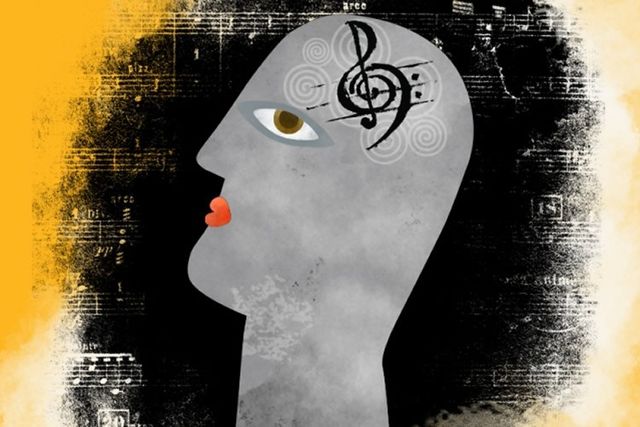
What does classical music do to our brains? Why do we often feel clearer, calmer—and at the same time more alert—after a concert? Studies show that music influences our brain more strongly than many believe. This is especially true for classical music—and within that, the waltz in particular.
Waltz & Effect
How Classical Music Affects Our Brain
Music and the Brain – What Studies Show
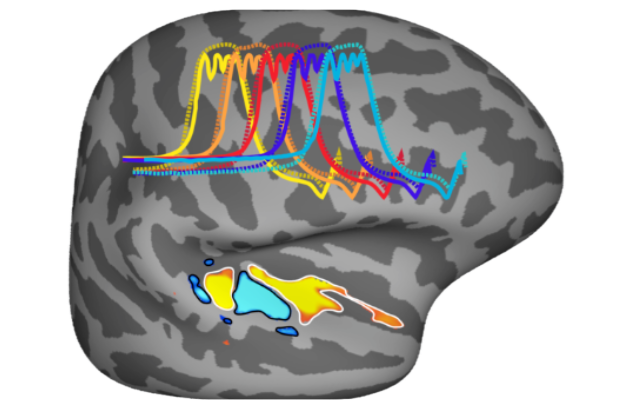
Research shows: Classical music activates many areas of the brain simultaneously—including areas for language, motor skills, emotion, and memory (Grahn & Brett, 2007). A particularly interesting effect was described in the 1990s: the so-called ‘Mozart effect’. This refers to the finding that listening to certain pieces of music, such as Mozart’s Sonata for Two Pianos in D Major (K. 448), can temporarily improve spatial-visual reasoning (Rauscher et al., 1993).
However, the effect is not limited to Mozart alone: music with a clear structure, repetition, and harmony activates neural coordination in the prefrontal and motor cortices, which in turn supports concentration, learning, and memory performance (Stanford University, 2007).
The Waltz – Balance in Motion
The ¾ time of a waltz creates a rhythmic order that our brain receives positively. The emphasis on the first beat creates a regular, swaying movement pattern that is processed particularly strongly in the cerebellum—which is responsible for motor coordination (Thaut et al., 2005). Studies show that rhythmically structured music promotes the synchronization of brainwaves and supports cognitive processes.
This effect can even be used therapeutically: in Parkinson’s patients, waltz-time music has been shown to help improve motor coordination (Pacchetti et al., 2000). For healthy people as well, the waltz can have a calming yet simultaneously activating effect, as it offers a balance between predictability and dynamism.

Classical Music in Everyday Life – More Than Background Music
Many people intentionally use classical music in their daily lives: for studying, during periods of concentration, or for relaxation. Unlike music with lyrics, it is less distracting yet still creates a stimulating atmosphere. The structure of classical music acts like a mental framework, offering the brain a sense of orientation (Jentschke et al., 2005).
This is especially true for works by composers like Mozart, Haydn, or Strauss, whose compositions are often based on clear patterns. Studies suggest that such structured music is particularly well-suited to support neural plasticity and reduce stress hormones (Chanda & Levitin, 2013).
Live Music as an Intense Experience
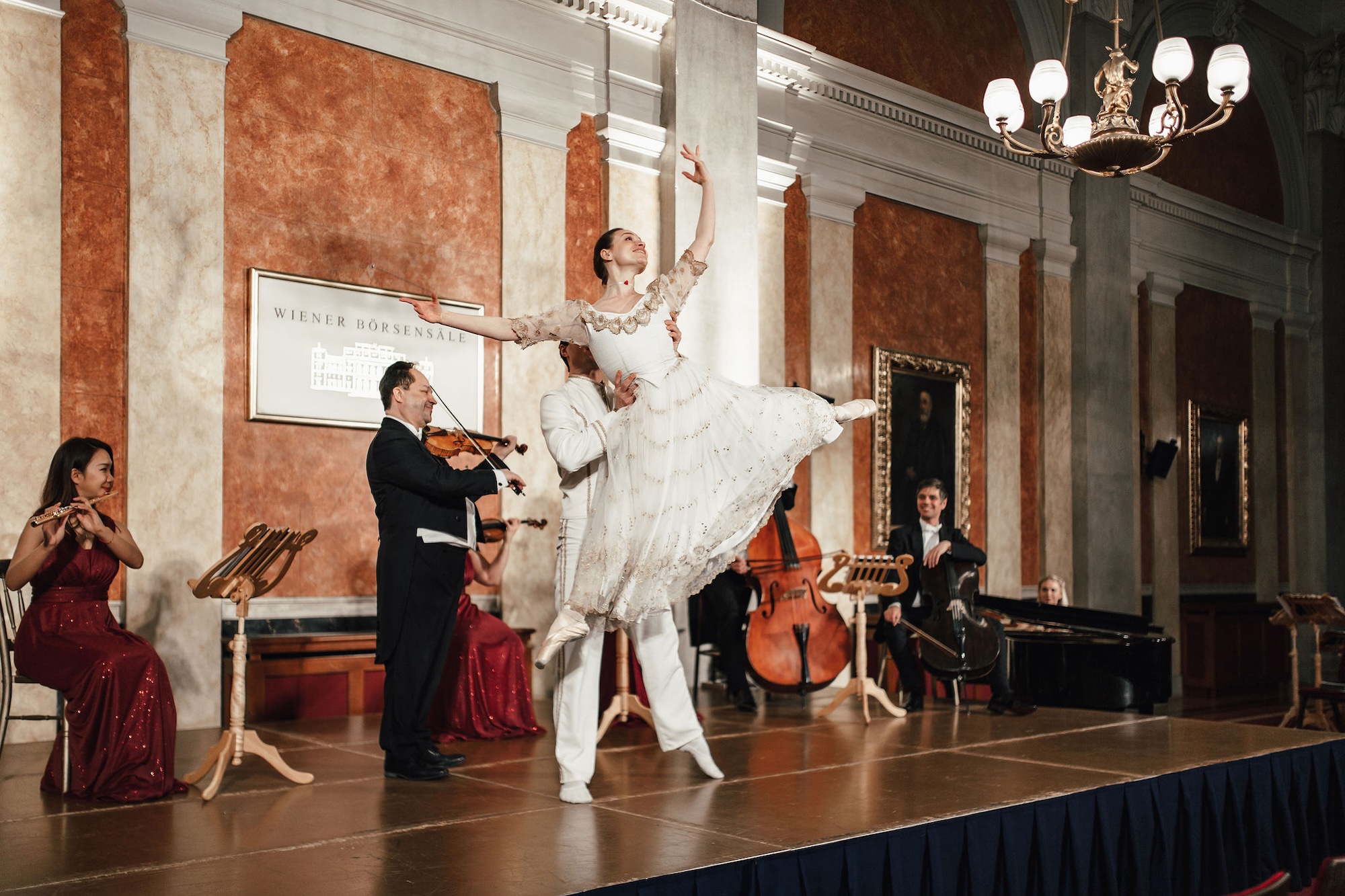
But what does this mean for the concert experience? Live music activates the brain even more intensely than recordings. The visual input, the atmosphere in the hall, the shared attention of the audience—all of this leads to a stronger emotional and neurological resonance (Pitts & Spencer, 2008).
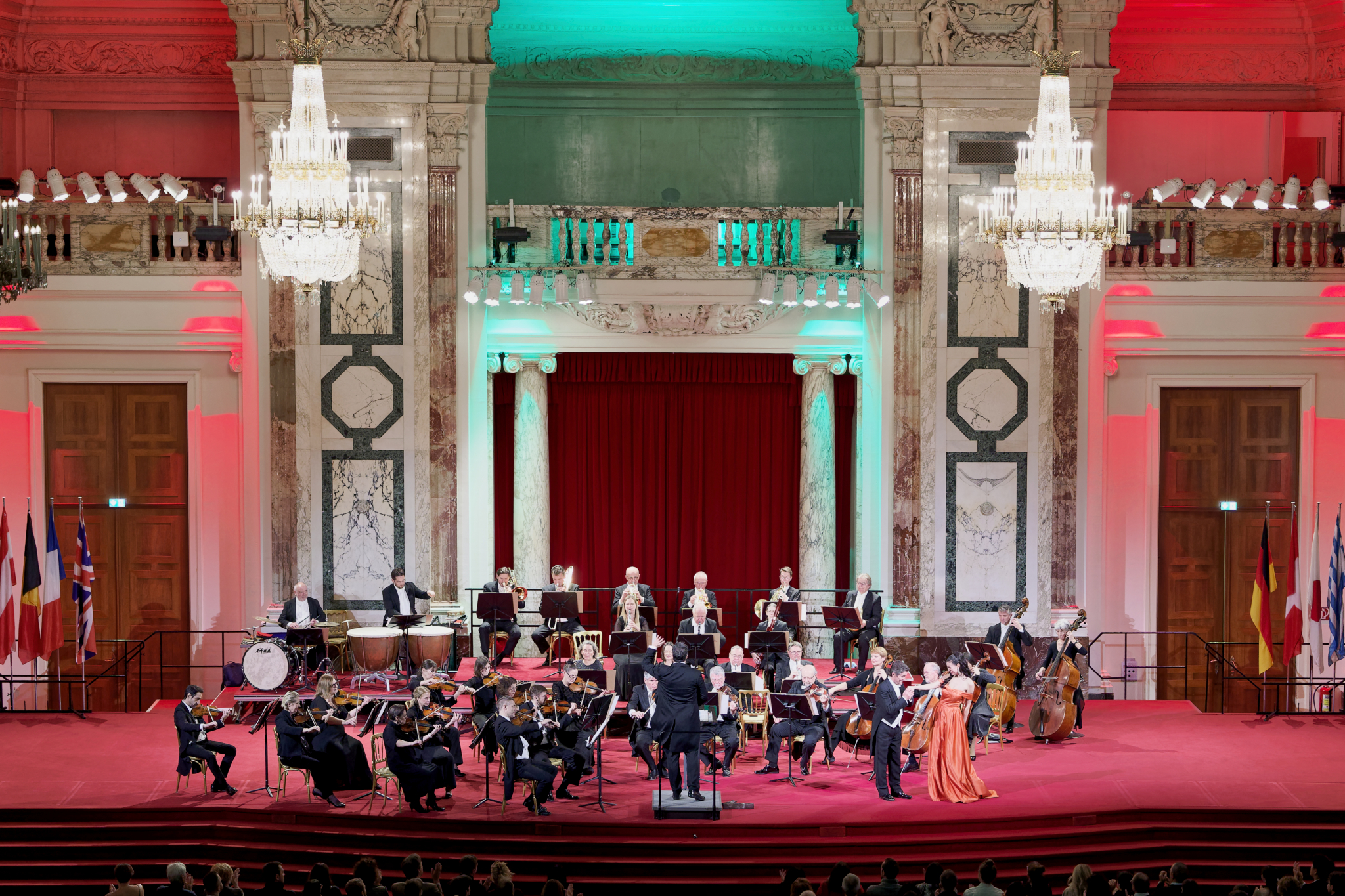
With the Vienna Residence Orchestra, the audience experiences the waltz in its most vibrant form: with period instruments, authentic performance practice, and direct interaction with the conductor. This isn’t just about making music; it’s about engaging with the nervous system.
Music that gets under your skin
Classical music—especially in the ¾ time of the waltz—is far more than entertainment. It influences our brain in many ways: it promotes concentration, activates emotions, soothes the autonomic nervous system, and can even have a therapeutic effect.
Those who experience it live can feel it: music is medicine, movement, and inspiration.
Sources (cited directly in the text):
– Rauscher, F. H., Shaw, G. L., & Ky, K. N. (1993). Music and spatial task performance. Nature, 365(6447), 611.
– Grahn, J. A., & Brett, M. (2007). Rhythm and beat perception in motor areas of the brain. Journal of Cognitive Neuroscience, 19(5), 893–906.
– Stanford University (2007). Music moves brain to pay attention. Stanford Medicine News Center.
– Thaut, M. H., Kenyon, G. P., Schauer, M. L., & McIntosh, G. C. (2005). The connection between rhythmicity and brain function. IEEE Engineering in Medicine and Biology Magazine, 24(1), 22–29.
– Pacchetti, C. et al. (2000). Active music therapy in Parkinson’s disease: An integrative method for motor and emotional rehabilitation. Psychosomatic Medicine, 62(3), 386–93.
– Jentschke, S., Koelsch, S., & Friederici, A. D. (2005). Investigating the relationship of music and language in children. Psychology of Music, 33(2), 219–230.
– Chanda, M. L., & Levitin, D. J. (2013). The neurochemistry of music. Trends in Cognitive Sciences, 17(4), 179–193.
– Pitts, S. E., & Spencer, C. P. (2008). Loyalty and longevity in audience listening: Investigating experiences of attendance at a chamber music festival. Music and Letters, 89(2), 227–241.
The Vienna Residence Orchestra, a chamber orchestra with a long tradition, performs works of Viennese classical music to perfection.