

The Palais Auersperg is a splendidly dignified yet graceful Baroque palace with a 600 sqm private park. It served as the frequent home and “residence” of the Wiener Residenz Orchester since its founding, most recently continuously from 2004 to 2024. Music has always been the invisible heart of this historic building. From Christoph Willibald Gluck to Joseph Haydn and W.A. Mozart, who, like many other musicians, composed here for premieres, the arc extends to Richard Strauss, for whom the palace served as inspiration for his opera “Der Rosenkavalier.” The palace was built in 1706 by Giovanni Christiano Neupauer based on plans by Johann Bernhard Fischer von Erlach for Hieronymus Capece di Rofrano. In 1777, it passed to the princely family Auersperg. It has always been a meeting place for European high nobility and politics. Thus, after housing the resistance movement for years, the palace became the seat of the first Austrian post-World War II government in 1945.
Auersperg Palace
Auersperg Palace
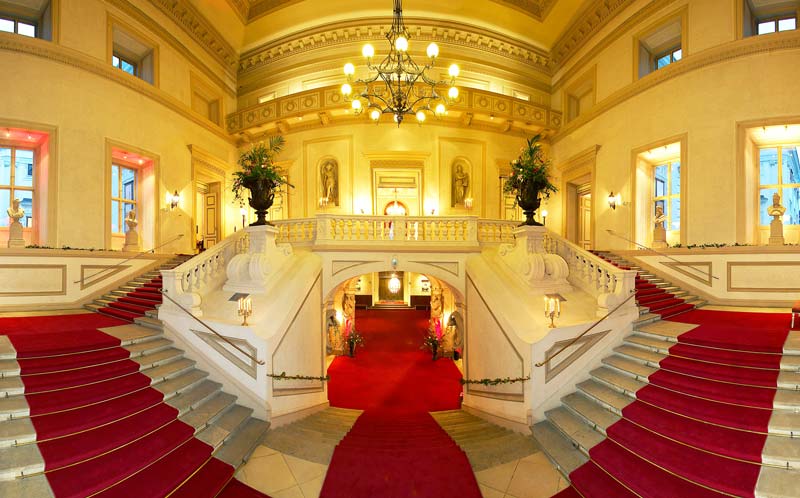
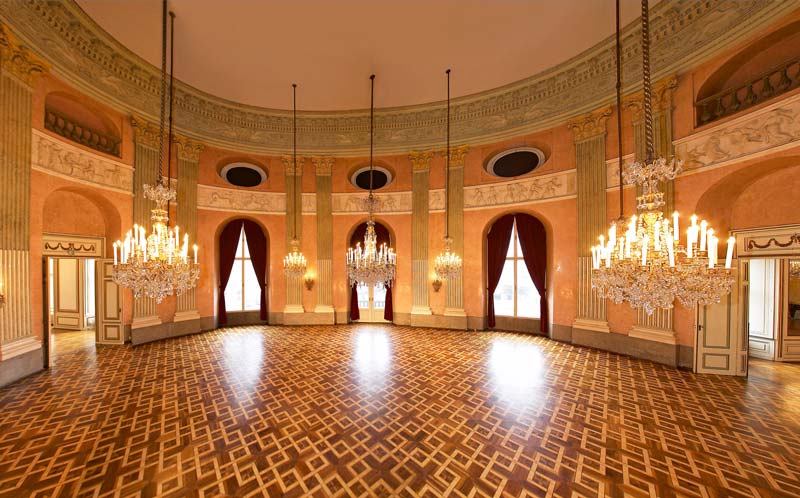
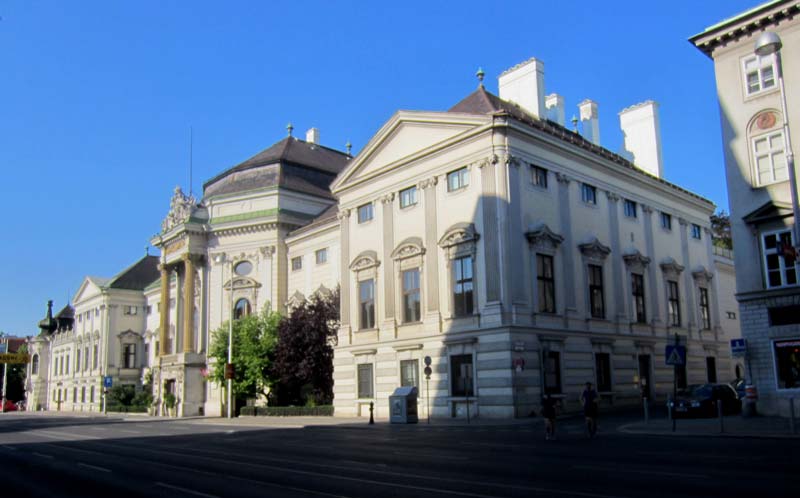
The Auersperg Palace is a splendidly dignified but at the same time graceful baroque palace, with a 600 m2 private park. It has been the home and “residence” of the Vienna Residence Orchestra since its foundation. They perform most of their daily concerts here. Music has always been the invisible center of the palace. From Christoph Willibald Gluck, through Joseph Haydn and W. A. Mozart, who like many other musicians, composed for world premieres in the palace, the arc stretches to Richard Strauss, whose opera “Der Rosenkavalier” was inspired by the palace. The palace was built in 1706 by Giovanni Christiano Neupauer, according to plans by Johann Bernhard Fischer von Erlach for Hieronymus Capece di Rofrano. In 1777, ownership passed to the Auersperg dynasty. It has always been a meeting place of European nobility and politics. After years of hosting the resistance movement, the palace was the seat of the first Austrian government after the Second World War in 1945.
Information Auersperg Palace
The Vienna Residence Orchestra, a chamber orchestra with a long tradition, performs works of Viennese classical music to perfection.